Fed to fight inflation with fastest fee hikes in decades
Warning: Undefined variable $post_id in /home/webpages/lima-city/booktips/wordpress_de-2022-03-17-33f52d/wp-content/themes/fast-press/single.php on line 26
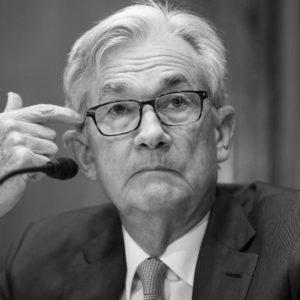
WASHINGTON (AP) — The Federal Reserve is poised this week to accelerate its most drastic steps in three decades to assault inflation by making it costlier to borrow — for a car, a house, a business deal, a credit card purchase — all of which can compound People’ financial strains and certain weaken the economy.
Yet with inflation having surged to a 40-year excessive, the Fed has come under extraordinary strain to behave aggressively to gradual spending and curb the worth spikes which can be bedeviling households and firms.
After its newest rate-setting meeting ends Wednesday, the Fed will almost definitely announce that it’s elevating its benchmark short-term interest rate by a half-percentage point — the sharpest fee hike since 2000. The Fed will doubtless carry out one other half-point charge hike at its next assembly in June and presumably on the next one after that, in July. Economists foresee nonetheless additional fee hikes within the months to observe.
What’s extra, the Fed can also be anticipated to announce Wednesday that it's going to begin quickly shrinking its huge stockpile of Treasury and mortgage bonds beginning in June — a transfer that will have the effect of additional tightening credit score.
Chair Jerome Powell and the Fed will take these steps largely at midnight. No one knows simply how excessive the central financial institution’s short-term rate should go to sluggish the financial system and restrain inflation. Nor do the officers know how much they'll reduce the Fed’s unprecedented $9 trillion stability sheet before they risk destabilizing monetary markets.
“I liken it to driving in reverse whereas utilizing the rear-view mirror,” mentioned Diane Swonk, chief economist on the consulting agency Grant Thornton. “They just don’t know what obstacles they’re going to hit.”
Yet many economists suppose the Fed is already acting too late. At the same time as inflation has soared, the Fed’s benchmark rate is in a spread of just 0.25% to 0.5%, a degree low sufficient to stimulate growth. Adjusted for inflation, the Fed’s key rate — which influences many client and business loans — is deep in unfavorable territory.
That’s why Powell and different Fed officials have said in current weeks that they want to increase rates “expeditiously,” to a degree that neither boosts nor restrains the financial system — what economists consult with as the “neutral” rate. Policymakers contemplate a impartial charge to be roughly 2.4%. However nobody is certain what the impartial price is at any specific time, especially in an economic system that is evolving shortly.
If, as most economists count on, the Fed this year carries out three half-point price hikes and then follows with three quarter-point hikes, its price would reach roughly impartial by year’s end. These increases would quantity to the fastest pace of fee hikes since 1989, famous Roberto Perli, an economist at Piper Sandler.
Even dovish Fed officers, akin to Charles Evans, president of the Federal Reserve Bank of Chicago, have endorsed that path. (Fed “doves” sometimes favor conserving charges low to help hiring, whereas “hawks” often support higher charges to curb inflation.)
Powell said last week that after the Fed reaches its neutral rate, it could then tighten credit even further — to a degree that might restrain development — “if that turns out to be acceptable.” Monetary markets are pricing in a rate as high as 3.6% by mid-2023, which might be the highest in 15 years.
Expectations for the Fed’s path have turn out to be clearer over simply the previous few months as inflation has intensified. That’s a sharp shift from just some month ago: After the Fed met in January, Powell said, “It's not possible to foretell with a lot confidence exactly what path for our policy charge is going to show acceptable.”
Jon Steinsson, an economics professor at the University of California, Berkeley, thinks the Fed should provide extra formal steering, given how briskly the economy is altering in the aftermath of the pandemic recession and Russia’s warfare towards Ukraine, which has exacerbated provide shortages internationally. The Fed’s most recent formal forecast, in March, had projected seven quarter-point rate hikes this 12 months — a tempo that is already hopelessly old-fashioned.
Steinsson, who in early January had called for a quarter-point improve at every assembly this year, said last week, “It's appropriate to do things quick to ship the signal that a pretty vital amount of tightening is required.”
One challenge the Fed faces is that the impartial rate is even more unsure now than usual. When the Fed’s key rate reached 2.25% to 2.5% in 2018, it triggered a drop-off in residence gross sales and financial markets fell. The Powell Fed responded by doing a U-turn: It reduce rates 3 times in 2019. That have instructed that the neutral rate might be lower than the Fed thinks.
However given how a lot prices have since spiked, thereby decreasing inflation-adjusted interest rates, whatever Fed price would actually gradual growth is likely to be far above 2.4%.
Shrinking the Fed’s stability sheet adds one other uncertainty. That's notably true given that the Fed is predicted to let $95 billion of securities roll off every month as they mature. That’s practically double the $50 billion pace it maintained earlier than the pandemic, the last time it lowered its bond holdings.
“Turning two knobs on the same time does make it a bit extra difficult,” stated Ellen Gaske, lead economist at PGIM Mounted Earnings.
Brett Ryan, an economist at Deutsche Financial institution, stated the balance-sheet discount will be roughly equal to 3 quarter-point will increase through subsequent yr. When added to the expected rate hikes, that will translate into about 4 percentage points of tightening through 2023. Such a dramatic step-up in borrowing costs would send the economy into recession by late next year, Deutsche Financial institution forecasts.
But Powell is counting on the strong job market and strong client spending to spare the U.S. such a fate. Although the economic system shrank within the January-March quarter by a 1.4% annual rate, companies and consumers increased their spending at a solid tempo.
If sustained, that spending might preserve the financial system expanding within the coming months and maybe beyond.